Europe’s Horses Were Not “Przewalski”
SHARE VIA:
Why the wild horses of the Ice Age looked familiar – but were not what was previously believed
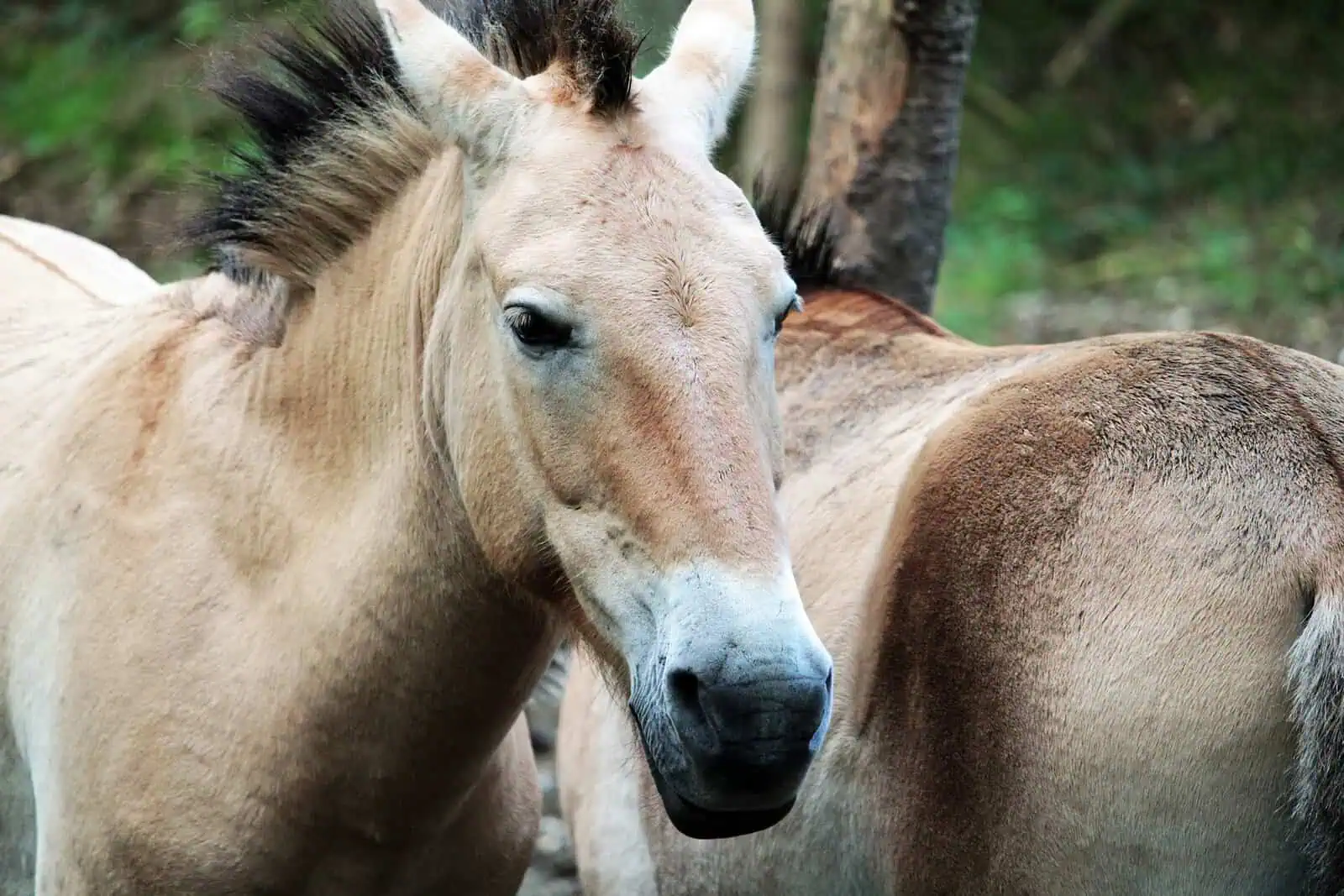
Across Ice Age Europe, herds of wild horses once thundered over windswept grasslands that stretched from the Atlantic coast to the Eurasian steppe. Their silhouettes – stocky bodies, thick necks, upright manes – are frozen in time on cave walls, from Lascaux to Chauvet. To modern eyes, they look unmistakably like the last surviving wild horse: the Przewalski’s horse.
For decades, that resemblance shaped a simple story: the horses of prehistoric Europe were essentially the same as Przewalski’s horse, just spread farther west. But science has a way of unsettling familiar narratives. Today, a combination of fossil analysis and ancient DNA is revealing a more complicated – and more intriguing—truth.
Reintroducing Przewalski horses?
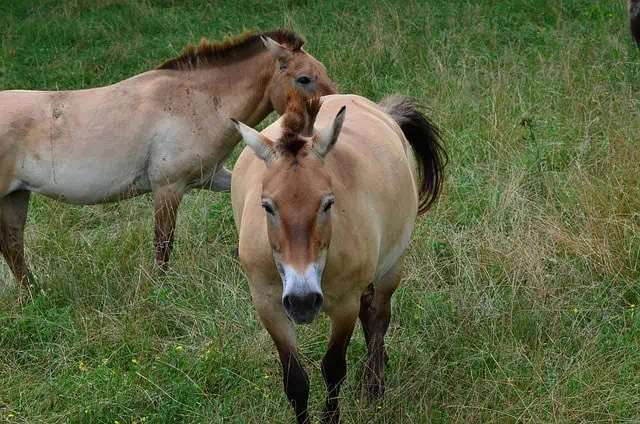
The Przewalski’s horse is often described as Europe’s last truly wild horse – a species that never underwent full domestication and once roamed the vast Eurasian steppes. After disappearing from the wild in the mid-20th century, it survived only thanks to captive breeding programs, and has since become one of conservation’s most remarkable comeback stories.
In recent decades, these hardy, stocky horses have been reintroduced into a growing number of European landscapes, where they play an important ecological role as natural grazers. By feeding on grasses, shrubs, and young trees, they help maintain open habitats, support biodiversity, and contribute to more dynamic, self-regulating ecosystems.
The illusion of similarity – Appearance ≠ ancestry
At first glance, identifying ancient horses seems straightforward. Paleontologists have long relied on bones: skulls, teeth, and limb proportions. Ice Age horses in Europe were typically robust, with strong jaws and relatively short legs – traits well suited to cold, open environments where grazing was constant and winters were harsh.
Those features match what we see in Przewalski’s horse today. It’s a tempting conclusion: same shape, same animal.
But evolution doesn’t always play fair with appearances.
Different populations can independently evolve similar traits when adapting to similar conditions, a phenomenon known as convergent evolution. In the steppe landscapes of the Pleistocene, survival favored a particular “horse design”: sturdy, efficient grazers built for endurance and cold.
The result? Horses that look alike—even when they are not closely related.
Bones can mislead
Fossils are abundant across Europe. Horse remains are among the most common finds at Paleolithic sites, often preserved alongside tools, hearths, and the remains of other Ice Age animals. Yet these bones rarely tell a complete story.
Subtle anatomical differences can hint at variation between populations, but they often fall short of distinguishing lineages. Two horses may share nearly identical skeletal features while belonging to entirely separate branches of the evolutionary tree.
For much of the 20th century, that limitation blurred distinctions. Many European fossils were broadly grouped under wild horse categories, sometimes assumed to be closely related to Przewalski’s horse—or even direct ancestors.
DNA rewrites the map
The real shift came with the rise of ancient DNA analysis. By extracting genetic material from fossilized bones, scientists gained a tool far more precise than morphology alone.
When researchers began sequencing the genomes of ancient European horses, the results were surprising.
Many of these animals did not belong to the Przewalski lineage at all. Instead, they represented a patchwork of now-extinct populations and lineages, some more closely related to the ancestors of modern domestic horses, others branching off in directions that left no living descendants.
In other words, Ice Age Europe was not home to a single, uniform kind of wild horse. It was a mosaic.
A lost diversity
This genetic evidence reveals a richer and more dynamic picture of the past. Rather than a continent populated by one familiar type, Europe hosted multiple horse populations, each adapted to local conditions and shaped by shifting climates (The genomic history of Iberian horses since the last Ice Age”, published in Nature Communications in 2025).
Some thrived during colder periods, expanding across the steppe-tundra. Others retreated or disappeared as forests spread and environments changed. Over thousands of years, migrations, isolations, and extinctions reshaped the genetic landscape again and again.
The Przewalski lineage, it seems, was only one branch among many—and not the dominant one in Europe.
The last wild horse
Today, Przewalski’s horse survives as a rare and remarkable remnant of deep evolutionary history. Once extinct in the wild, it has been reintroduced to parts of Central Asia, its dun coat and upright mane echoing the forms painted on ancient cave walls.
Yet its resemblance to Europe’s prehistoric horses is, in part, a coincidence of adaptation. Those Ice Age animals may have looked the same, moved the same, and lived in similar herds—but genetically, they often told a different story.
Rethinking the familiar
The idea that “Europe’s horses were Przewalski’s horses” is appealing in its simplicity. It links past and present in a single, continuous thread. But the reality is more complex—and more interesting.
What once seemed like a single lineage turns out to be a tapestry of many, most now lost to time. Fossils give us the shapes of these animals; DNA reveals their identities. Together, they show that resemblance is not the same as relationship.
And in the quiet galleries of Europe’s caves, where horses still gallop across stone walls, we are left with a subtle reminder:
Sometimes, the past looks familiar—until you look closer.
Key recent studies
1. Large-scale ancient DNA study (2025, Nature Communications)
- The genomic history of Iberian horses since the last Ice Age
- This is one of the most relevant new papers.
What it found:
- Sequenced 87 ancient horse genomes from Iberia and the Mediterranean
- Identified a distinct, now-extinct lineage (“IBE”) in Europe
- Crucially: this lineage was morphologically similar to other horses but genetically very different
2. Schöningen horse genome study (2025, Nature Ecology & Evolution)
What it found:
- Reconstructed DNA from a ~300,000-year-old European horse (Equus mosbachensis)
- Showed this was an evolutionary dead-end lineage, not directly ancestral to modern horses
- Europe hosted multiple extinct horse lineages over time, reinforcing that:
- The continent was not dominated by a single “Przewalski-like” population
- Many European horses were genetically separate branches
3. Body size, dental pathology and maternal genetic diversity of ancient horses (2026 BioRxiv preprint)
What it shows:
- Ongoing work sequencing horses from the Baltic and Russia
- Focus on maternal genetic diversity and population structure
- Przewalski horses carry very old genetic lineages that were already present in ancient Eurasian horse populations, reflecting a deep shared evolutionary history.
- Even regional datasets show high diversity and multiple lineages, not a single uniform wild horse population.
4. Complete genome of Przewalski’s horse (2024)
What it shows:
- High-resolution genome of the only surviving wild horse lineage
- Provides a baseline for comparison, allowing scientists to test whether ancient fossils belong to the Przewalski lineage
- Most European fossiles don’t.
- This reinforces that Przewalski’s horses are not a distant “wild ancestor” of European horses, but a sister lineage within the same wild horse species complex.