Share:
Could the Eurasian Lynx Return to the Netherlands? New Research Says Yes — If We’re Ready
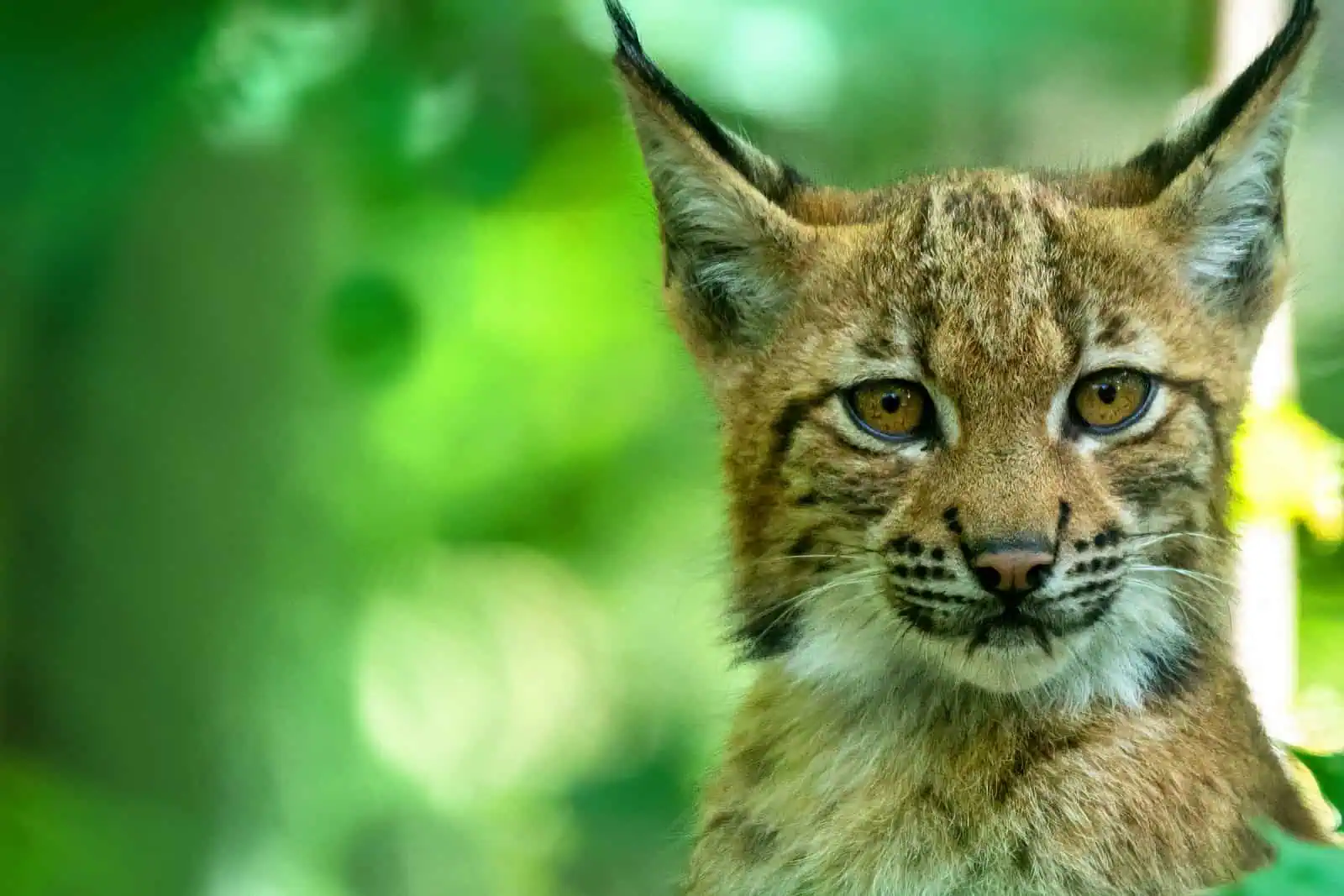
Few animals capture the imagination quite like the Eurasian lynx. Europe’s largest wild cat — secretive, solitary, and almost mythically elusive — was once part of the natural fabric of landscapes across the continent, including, most likely, the Netherlands. Today, it is absent. But for how much longer?
A new advisory report produced by Sophie Trenning, a Van Hall Larenstein student who completed her graduation internship at the Rewilding Academy between February and June 2026, offers the most structured assessment to date of whether the Eurasian lynx could return to the Netherlands — and what would need to happen to make that return successful. The findings are both encouraging and sobering: the Netherlands is potentially ready for the lynx ecologically, but society and governance still have some catching up to do.
A question of preparation, not permission
One of the most important reframings in the report is deceptively simple. The question is not whether the Netherlands should allow the lynx to return. Under European and Dutch conservation legislation, a naturally recolonising protected species automatically receives legal protection the moment it crosses the border. The lynx is already recognised as a native species under Dutch law. If it arrives, it is protected. The real question, as Sophie’s research makes clear, is whether the Netherlands is prepared for the possibility.
That distinction matters enormously. The return of the wolf in 2015 caught Dutch society largely off guard. Management frameworks were built reactively, compensation schemes were established under pressure, and public debate became deeply polarised before adequate governance structures were in place. The report argues that with the lynx — whose nearest established populations are already within around 50 kilometres of the Dutch border in the Eifel and Ardennes — the Netherlands has a rare opportunity to do things differently.
What the research found
To assess feasibility in a rigorous and transparent way, Sophie developed a Multi-Criteria Analysis (MCA) framework integrating sixteen indicators across three domains: ecology, society, and governance. Each indicator was scored from 1 to 5 based on a systematic review of scientific literature and seven semi-structured expert interviews with specialists in carnivore ecology, conservation law, agricultural stakeholder interests, provincial wildlife policy, lynx management in Spain, captive lynx management, and stakeholder engagement from the Lynx to Scotland initiative.
The resulting overall feasibility score of 3.14 out of 5 places lynx recolonisation firmly in the category of potentially feasible — not a definitive green light, but far from a dead end.
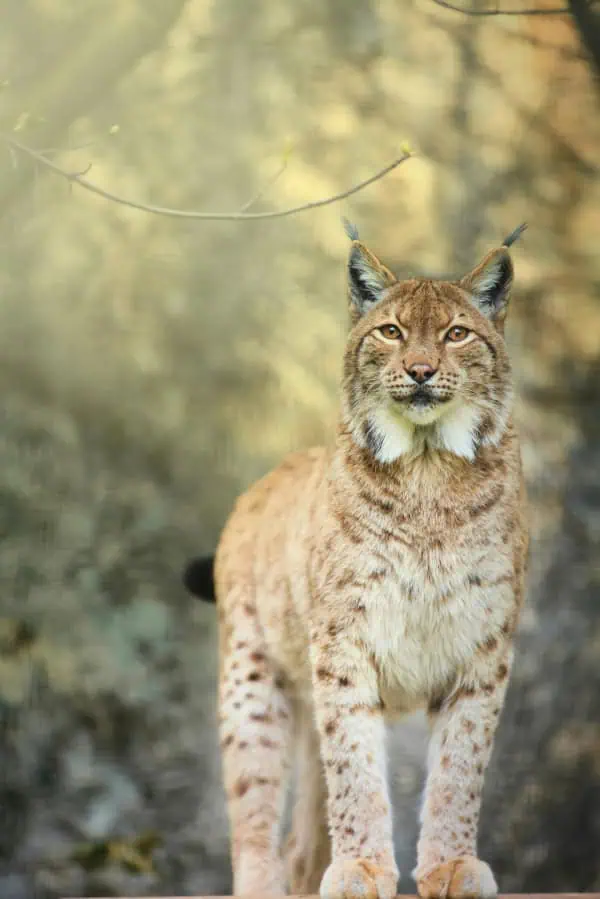
The ecological picture is broadly positive. The Netherlands has abundant roe deer — the lynx’s primary prey — throughout much of the country. The Veluwe in particular, with an estimated 5,500 roe deer, could support multiple lynx territories. Habitat quality in the Veluwe, parts of Limburg, and the Brabantse Kempen was assessed as favourable, and lynx are increasingly understood to be more adaptable to human-dominated landscapes than traditional habitat models suggest. Legal protection under the EU Habitats Directive is already in place. And unlike wolves, lynx pose virtually no risk to human safety — across all of Europe, there are no documented cases of unprovoked lynx attacks on people.
The main ecological constraints are connectivity and population viability. The Dutch landscape is highly fragmented. Infrastructure, urbanisation, and intensive agriculture create significant barriers to dispersal both into and within the country. While individual lynx are capable of dispersing hundreds of kilometres, the available dispersal routes into the Netherlands — primarily through the Ardennes-Eifel corridor into South Limburg — are limited and interrupted. Even if lynx do reach suitable habitat, the patches available are likely too small and too isolated to support a self-sustaining population without ongoing immigration from neighbouring populations. That immigration pressure will likely only become significant once the Belgian population — currently still expanding — reaches a critical mass of around 75 individuals.
On the social side, the assessment is more uncertain. Public attitudes are expected to be cautiously positive: the lynx’s elusive nature and minimal impact on human safety distinguish it meaningfully from the wolf in public perception. But stakeholder attitudes — particularly among farmers, hunters, and land managers — are more complex and more difficult to predict. Concerns about livestock predation, additional management burdens, and the broader political climate around large carnivores in the Netherlands all weigh on the social feasibility assessment. The report is candid about this: perception often becomes reality, and whether or not concerns are objectively justified, they are real to those who hold them and must be taken seriously.
Governance feasibility sits in the middle. The legal framework is solid, and experience gained through wolf management has built genuine institutional knowledge and monitoring capacity. But preparation for the lynx specifically is almost entirely absent. No national strategy exists. No dedicated compensation framework is in place. Much of what was being developed in Limburg before the wolf’s return has since been quietly shelved as the wolf dominated the large carnivore agenda. The report identifies this preparedness gap as one of the most actionable and urgent areas for improvement.
Six pathways to a better future
Perhaps the most practically useful contribution of the report is its scenario analysis, which explores how six different interventions — two ecological, two social, two governance-related — could individually and collectively shift the feasibility score.
The most ecologically impactful scenario involves improving landscape connectivity: building wildlife crossings, strengthening ecological corridors, and creating stepping-stone habitats along the routes most likely to be used by dispersing lynx, particularly between the Ardennes-Eifel region and Limburg, and between Limburg and the Veluwe. This single intervention could raise the overall feasibility score to 3.66 — the largest single gain of any scenario. But it is also the most complex and costly to realise, requiring sustained investment, cross-border coordination, and political commitment over decades. It is, in the report’s own assessment, an essential long-term goal rather than a short-term action.
More immediately achievable are the social and governance scenarios. A national lynx preparedness strategy — defining responsibilities, establishing monitoring protocols, developing incident response procedures, and integrating lynx into existing large carnivore policy frameworks — could be developed before any lynx sets foot in the Netherlands. A cross-border cooperation framework with Germany and Belgium, building on existing European conservation networks, would allow Dutch authorities to benefit from established expertise and receive early warning of dispersing individuals. An education and awareness programme could begin shifting public understanding now, before any controversy arises. And a proactive stakeholder engagement programme — involving farmers, hunters, land managers, and conservation organisations in genuine dialogue, with practical support and compensation mechanisms built in from the start — could transform stakeholder attitudes from a constraint into an asset.
Combined, these interventions could raise the overall feasibility score to between 3.89 and 4.06 — potentially crossing the threshold from potentially feasible into feasible, depending on how well stakeholder concerns are addressed.
The broader lesson
Sophie’s research carries a message that extends well beyond the lynx. It demonstrates something that rewilding practitioners and conservationists often know intuitively but rarely document with this level of rigour: ecological readiness is necessary but not sufficient. A landscape can have the right habitat, the right prey, the right legal framework — and still fail to support a recovering species if the social and governance conditions are not in place.
The Netherlands is, as the report puts it, a densely populated and highly managed landscape. But it is also a country with a long tradition of ambitious nature development, from Plan Ooievaar to Ruimte voor de Rivier. The white-tailed eagle returned. The great egret returned. The wolf returned. Each time, the country adapted. The question now is whether it can learn to anticipate rather than react.
As Sophie writes in her conclusion: “Ultimately, whether lynx recolonisation occurs is not something that can be determined by policymakers, conservationists, or researchers alone. That decision will be made by the lynx itself. The responsibility of society is therefore not to decide whether recolonisation will happen, but to determine how prepared it is to respond should it occur.“
For the Rewilding Academy, that conclusion is both an interesting challenge and an invitation. The report is now available in full and represents a foundation on which to build: for stakeholder dialogue, for policy conversations, for education, and for the kind of careful, patient preparation that gives wildlife — and the societies that share landscapes with it — the best possible chance of coexistence.
Sophie Trenning completed this research as part of her graduation project at Van Hall Larenstein University of Applied Sciences, supervised by the Rewilding Academy. The full report is available on request.