Tool‑Using Cow Challenges How We See Animal Intelligence
SHARE VIA:
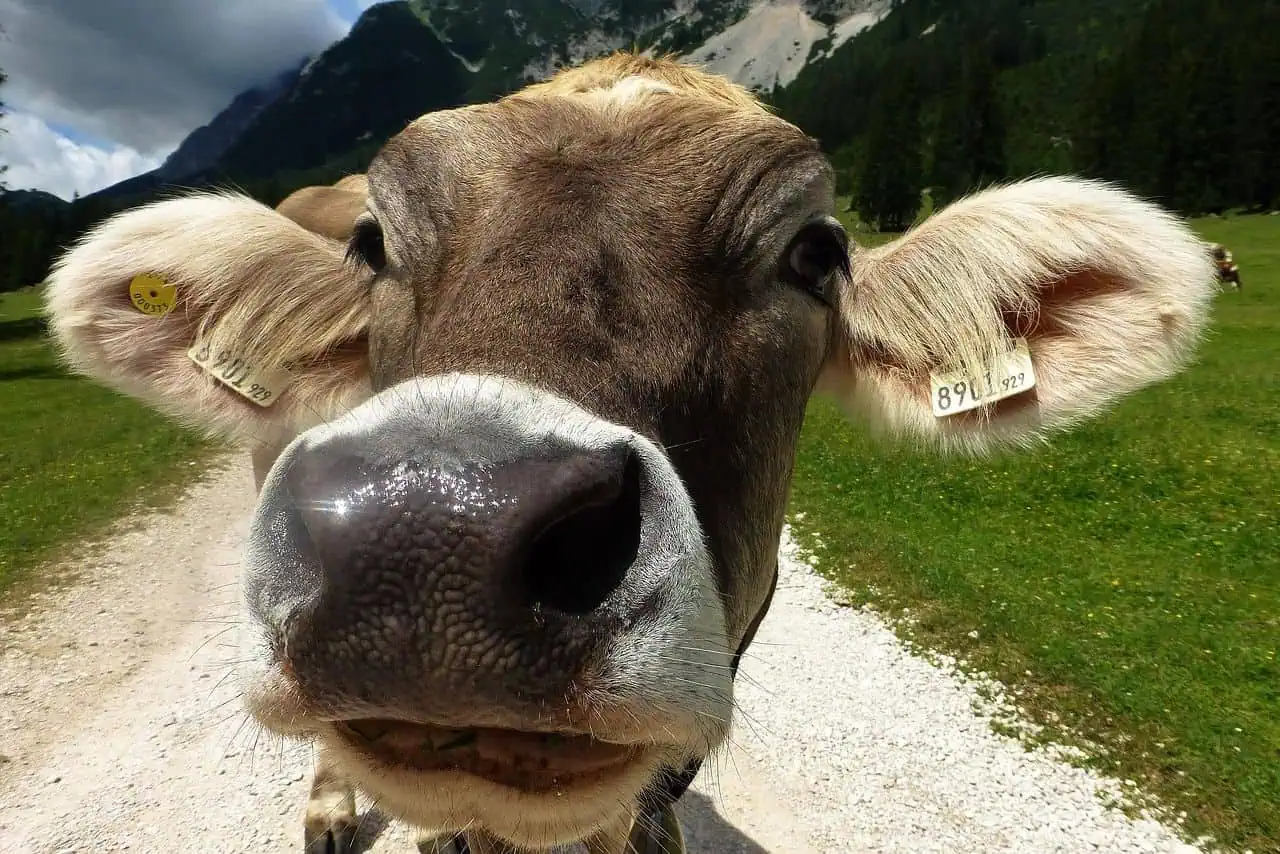
In an idyllic Austrian countryside, a long‑lived Swiss Brown cow named Veronika is compelling scientists to rethink long‑standing assumptions about animal intelligence. In a study published in Current Biology — the first of its kind — researchers documented flexible tool use in cattle, broadening our understanding of animal cognition and prompting deeper questions about how environment and lived experience shape behaviour.
Tool Use Beyond Primates
Tool use — defined as the manipulation of an external object to achieve a goal — has traditionally been seen as a hallmark of advanced cognition. Chimpanzees, certain birds like New Caledonian crows, and a handful of other species have demonstrated this ability in ways that imply problem solving and intentional action. Yet until now, no experimental evidence existed showing that cattle could independently use tools in a flexible manner.
Veronika doesn’t fashion tools the way a chimp might. Instead, she selects and manipulates objects in her environment — sticks and deck brushes — to scratch parts of her body that would otherwise be unreachable. In controlled trials, researchers presented a deck brush on the ground in random orientations and recorded how Veronika approached it. She didn’t simply swipe at it randomly. Instead, she consistently chose a functional end of the brush depending on which body region she wanted to relieve. For broad, firm areas like her back, she used the bristled end, applying a forceful, sweeping motion. For softer, more sensitive regions underneath her belly and around her udder, she strategically used the smooth handle in slower, more controlled movements. Across repeated sessions, her choices were both functionally appropriate and consistent, hallmarks of genuinely flexible tool use.
Multi-Purpose Problem Solving
What makes this discovery especially striking is not only that Veronika uses tools at all, but that she does so in different ways with one object, adapting her behaviour to meet specific needs. Until now, multi‑purpose tool use — the use of different parts of the same tool for different functions — had been convincingly documented only in chimpanzees outside of humans. The observation that a cow can display this kind of behavioural flexibility challenges narrow assumptions about cognitive capability and draws attention to how much we may be overlooking in species we have lived alongside for millennia.
Context Matters
This revelation raises important questions about how we assess intelligence in animals, especially those domesticated and managed within human systems. Cattle are among the earliest large domesticated species, shaped by thousands of years of human selection for production traits. Their behaviour — especially cognitive capacities — has largely been interpreted through the lens of efficiency, yields, and control, rather than curiosity, problem‑solving, or innovation. Many researchers suggest the lack of documented tool use in cattle until now reflects observation bias more than genuine cognitive limitations. As study authors note, most cows do not live as long as Veronika, nor do they inhabit environments rich in manipulable objects or opportunities for exploratory behaviour. In Veronika’s case, a long life, daily contact with humans who treat her as a companion animal, and access to a varied physical landscape likely created conditions where her natural capacities could emerge and be observed.
It is tempting to view Veronika as an exception — a cow with extraordinary smarts. But researchers emphasize that what is truly special may be the context, not the individual. Given time, space, and a stimulating environment, other cattle might well demonstrate similar behaviours. Tool use has likely gone unnoticed simply because the environments and interactions required to bring it out are rare in modern livestock systems.
Observing Natural Intelligence
This insight has profound implications for how we conceive of animal minds and the value of creating conditions that allow natural behaviour to emerge. In rewilding work, whether on a landscape scale or within innovative agricultural systems, the emphasis is not on training or engineering behaviour, but on restoring environments that allow animals to express the full range of their behavioural repertoires — from exploration and play to problem solving and choice. Veronika’s case illustrates that cognitive abilities are not fixed traits visible only in controlled experiments, but can be revealed when animals are afforded the time, complexity, autonomy, and diversity of experiences they would naturally seek out.
In a world increasingly defined by human control, moments like these remind us that we have much to learn from the beings we share the planet with. When we step back and observe with curiosity rather than expectation, we may find that intelligence — in its many forms — is far more widespread, nuanced, and surprising than we ever assumed.
Veronica’s owner, organic farmer Witgar Wiegele said: “Save the nature, then you protect yourself. And nature diversity is the key to survival of this planet“.